Section 125 Cafeteria Plans: What Every Employer Needs to Know
Section 125 plans are the foundation for some of the most powerful tax savings strategies available. Here is how they work and why they matter.
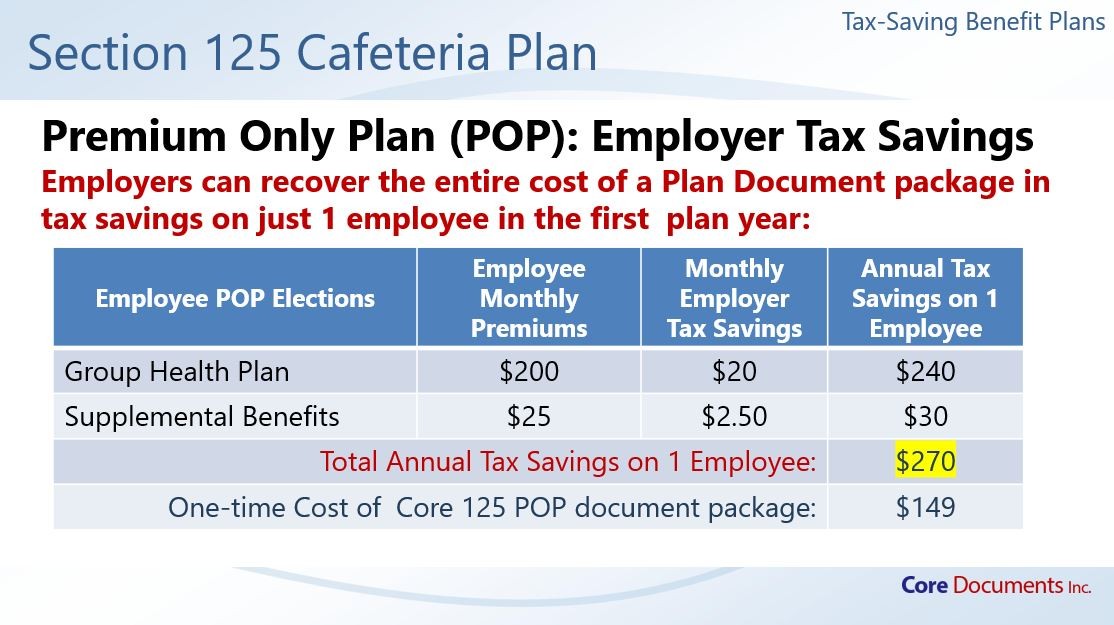
Section 125 of the Internal Revenue Code allows employers to offer "cafeteria plans" that let employees choose between taxable cash and qualifying nontaxable benefits. This simple concept is the foundation for billions of dollars in annual tax savings across American businesses.
How Section 125 Plans Work
At its core, a Section 125 plan gives employees the ability to pay for certain benefits using pre-tax dollars. This means the money used for these benefits is not subject to:
Common benefits offered through Section 125 plans include:
The Employer Advantage
When employees elect pre-tax benefits through a Section 125 plan, the employer saves too. Every dollar of compensation reclassified as a pre-tax benefit reduces the employer’s FICA tax obligation by 7.65%.
Taking It Further with SIMERP
While a standard Section 125 plan focuses primarily on premium conversion and FSAs, SIMERP adds a powerful layer: a self-insured medical expense reimbursement arrangement under IRC §105(b).
This combination allows a defined amount of wages to be redirected into a tax-exempt medical reimbursement, generating savings beyond what a traditional cafeteria plan provides—averaging $639 per employee per year in additional FICA reductions.
Eligibility and Setup
Section 125 plans are available to all employers, but the SIMERP enhancement requires a minimum of 10 W-2 employees. Setup is handled entirely by EHP, including:
The Bottom Line
If your company has employees and offers any form of health benefits, you should have a Section 125 plan in place. And if you have 10 or more W-2 employees, layering SIMERP on top can turn a modest tax benefit into a significant annual savings engine.
Ready to See How Much You Could Save?
Take our free qualification assessment and discover if SIMERP is the right fit for your business.
Get Your Free Assessment